
Stinger Chemicals
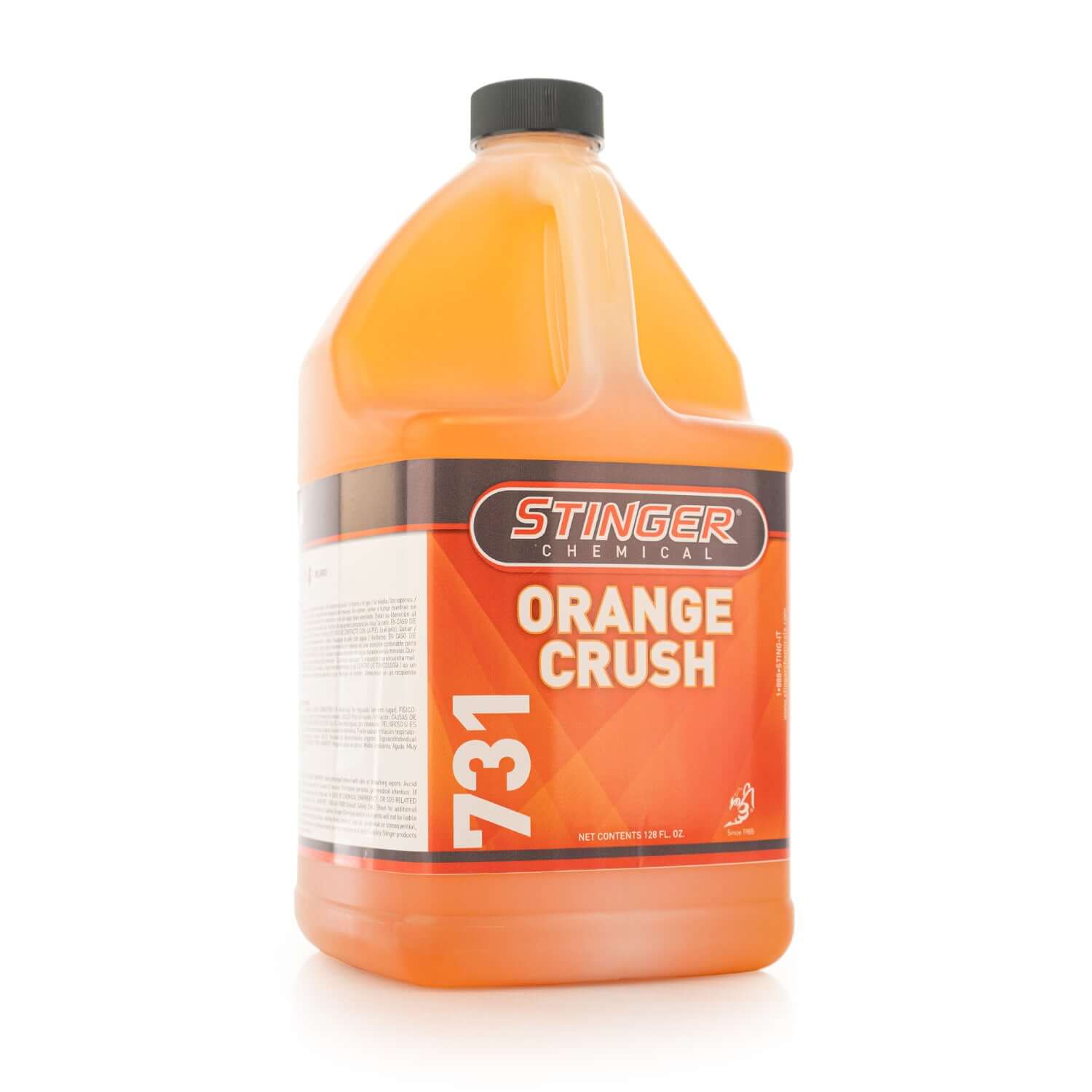
Stinger Chemical Orange Crush Degreaser
Stinger Chemical Orange Crush Degreaser
Gallon
SNS Auto Supply
750 11th Ave NE
West Fargo ND 58078
United States
Made in USA
Choose options
Made in USA
Made in USA
Clean, Degrease, and Remove Tar
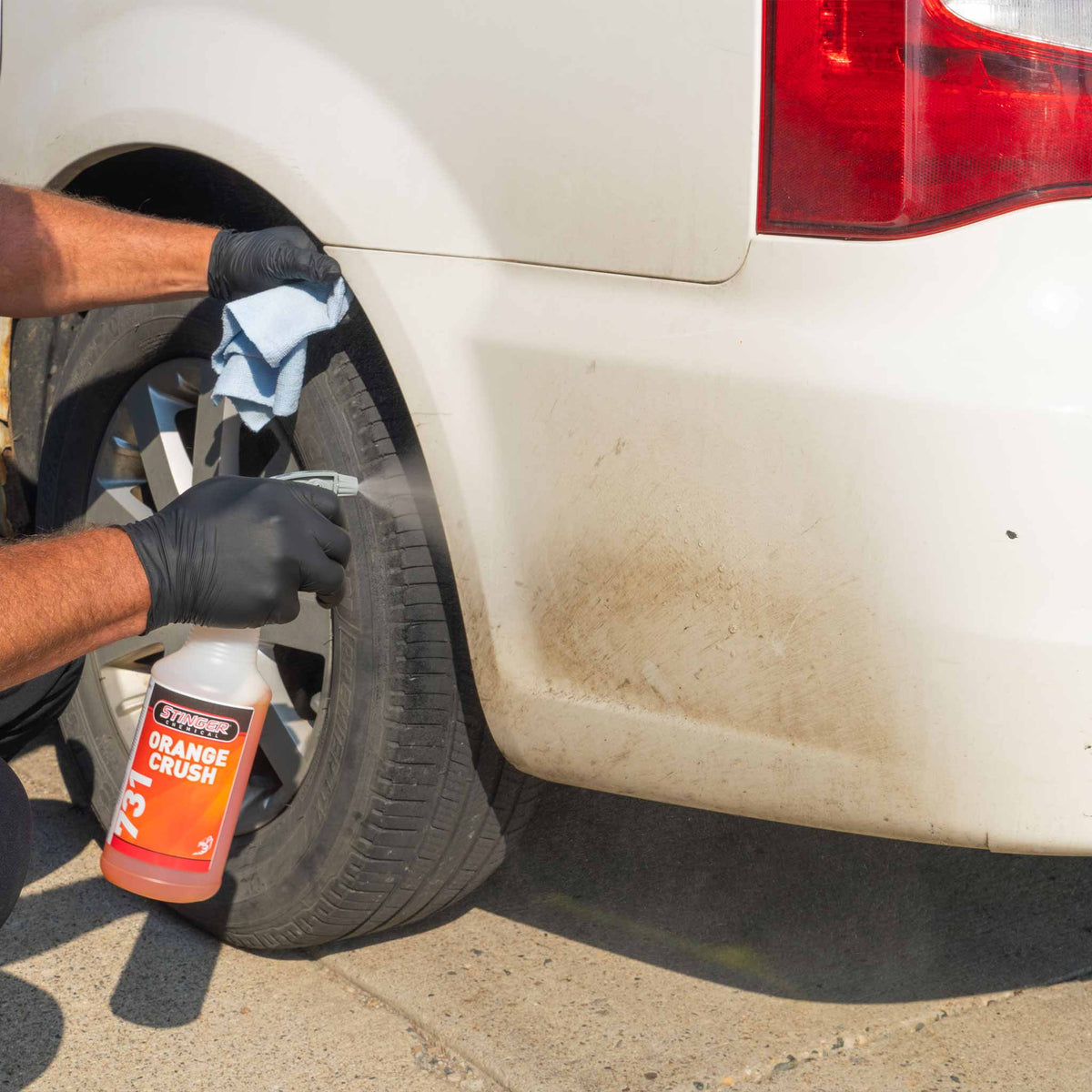
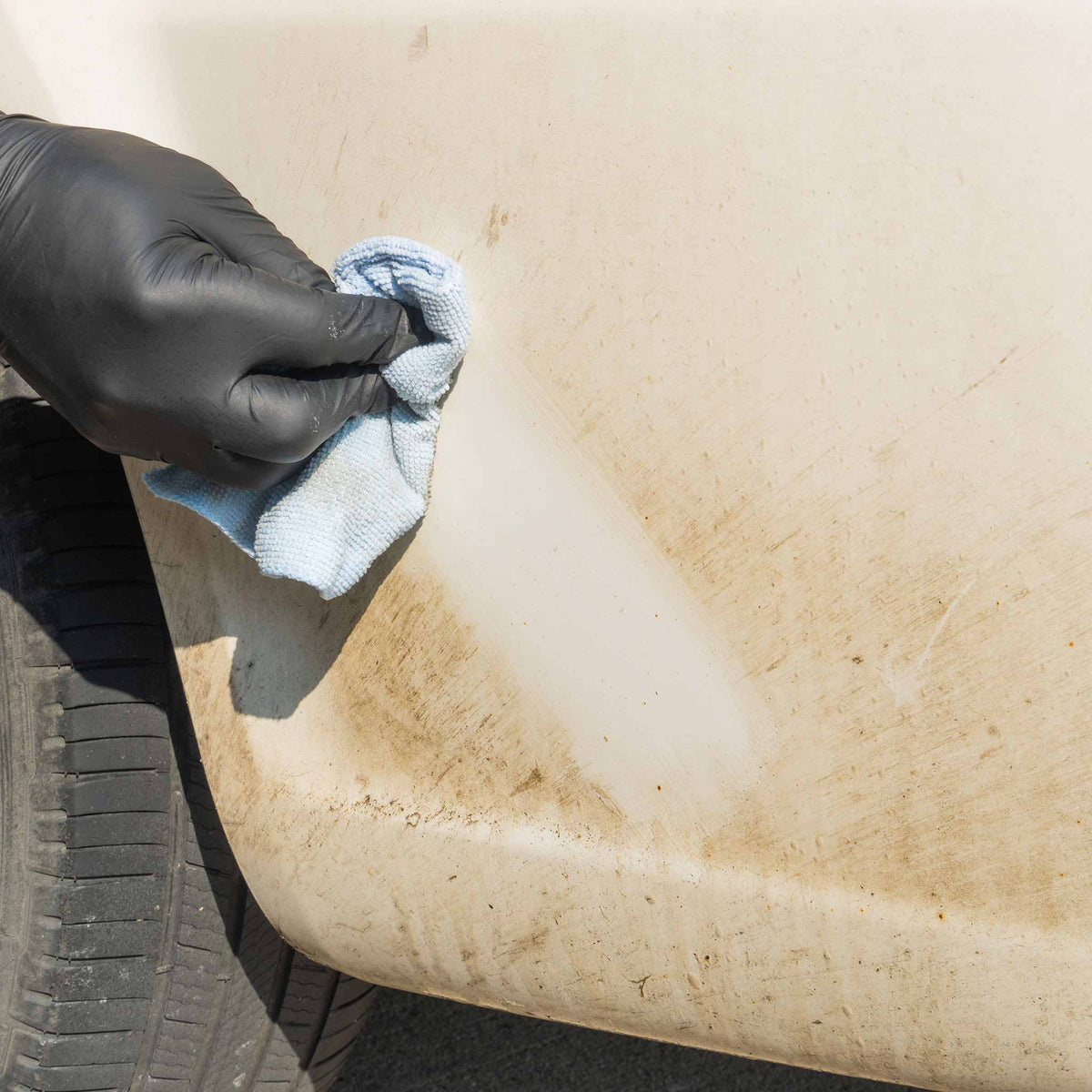
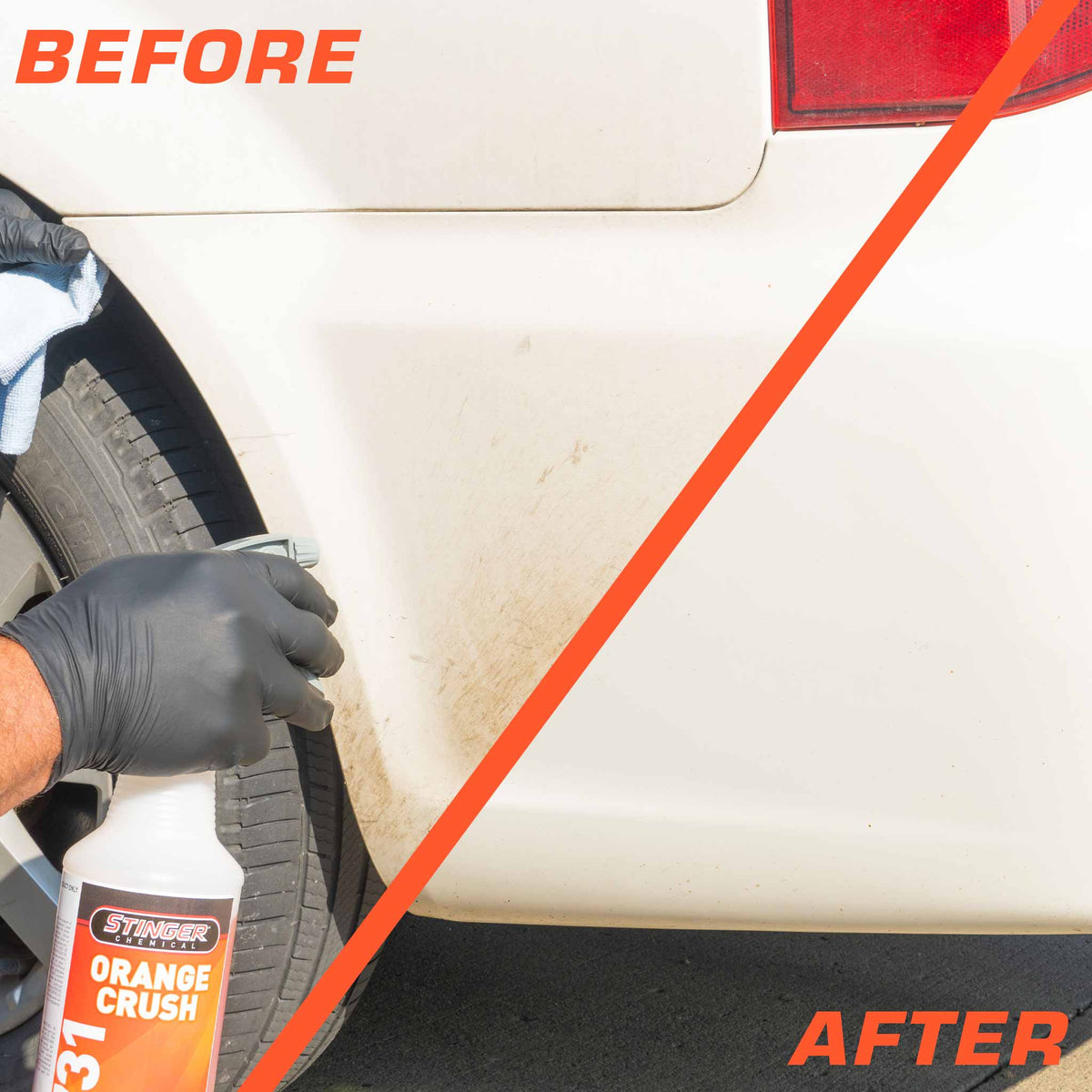
Stinger Chemical Orange Crush is a D-Limonene citrus solvent built for the jobs alkaline degreasers cannot touch. Tar, asphalt, adhesive, gum, wax, and resin are non-polar, which is why a high-pH degreaser slides right over them while a solvent dissolves them on contact. Use it straight for road tar and heavy adhesive buildup, or dilute up to 1:30 for general cleaning on epoxy floors, shop walls, equipment, and vehicle exteriors. Run your ratio through the dilution calculator before mixing.
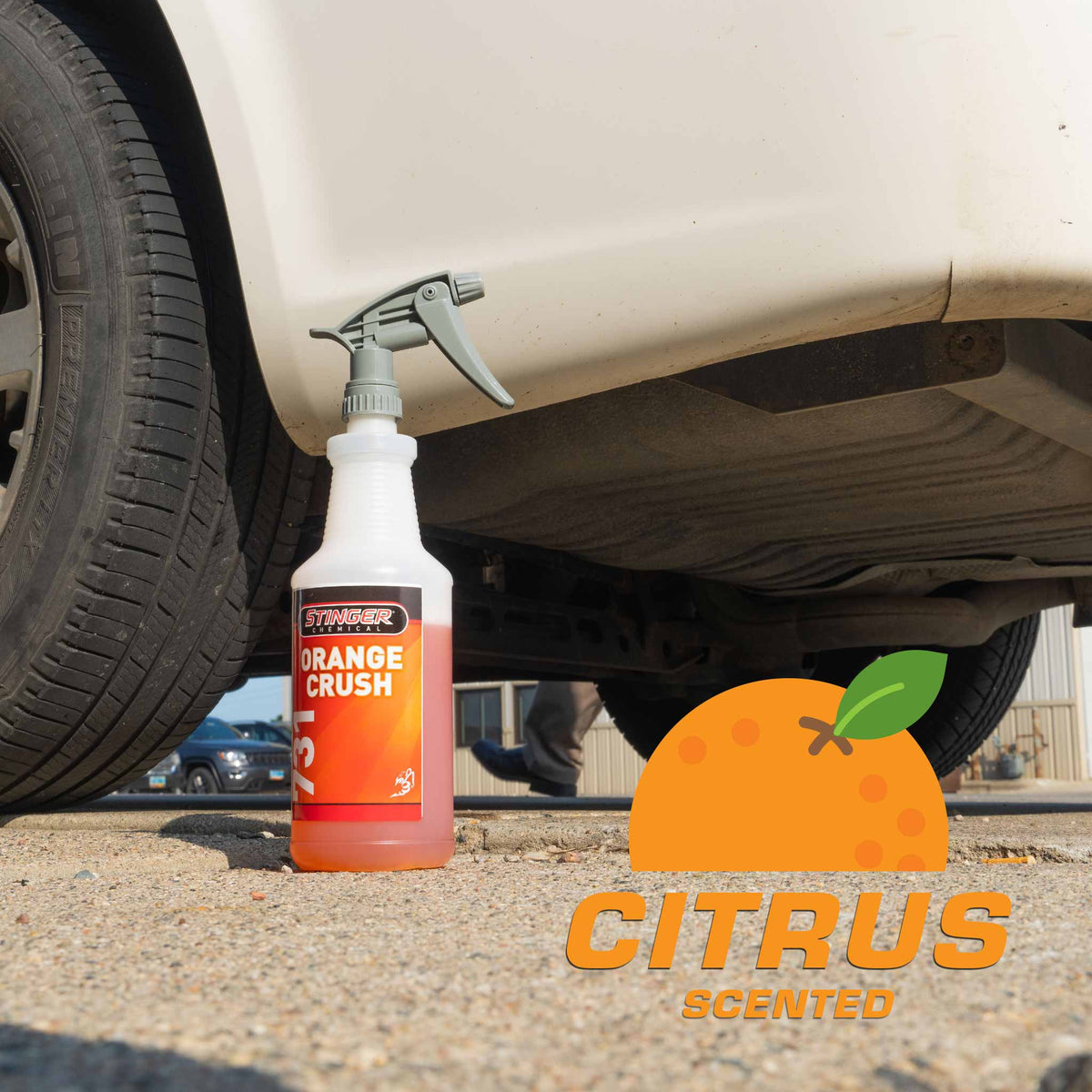
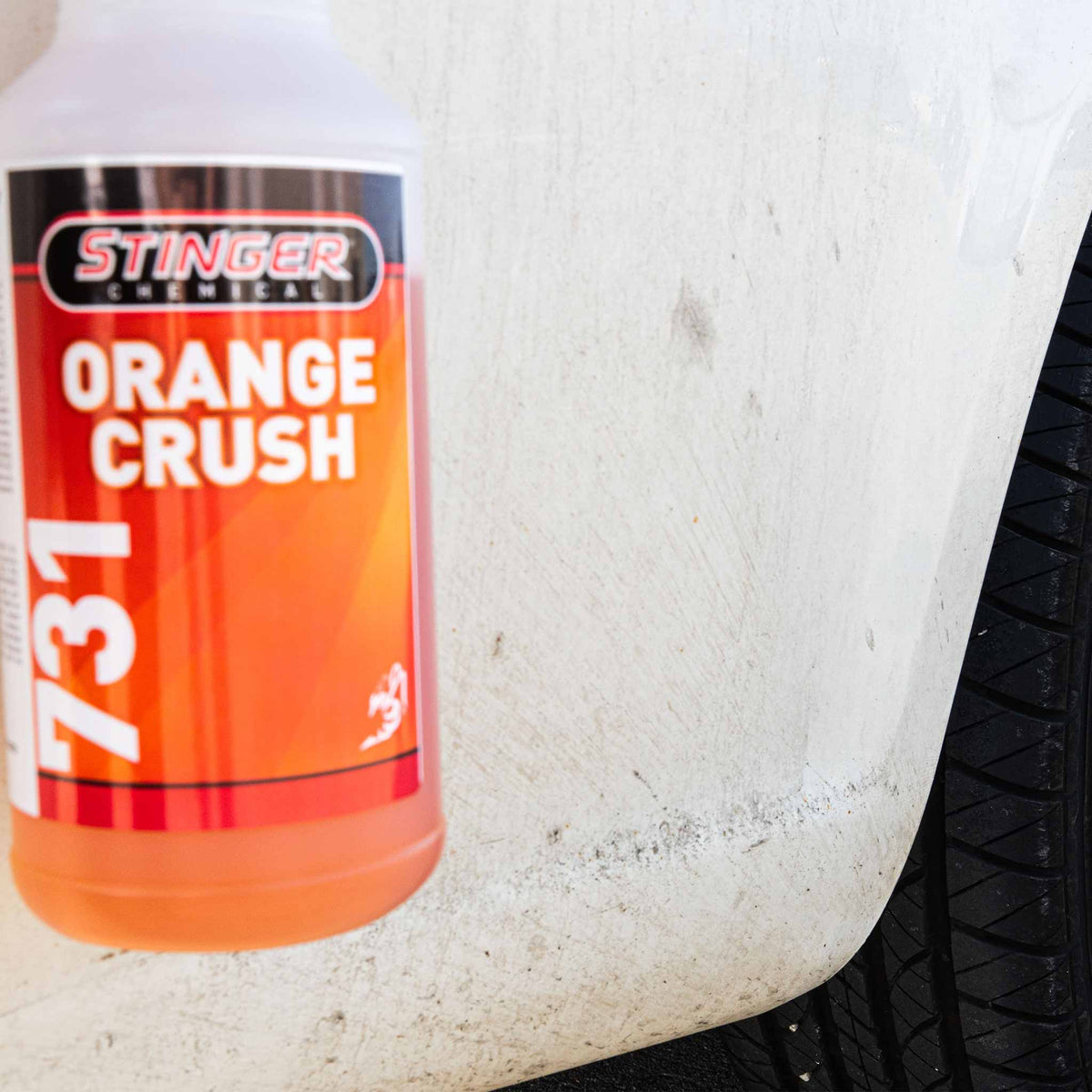
Since arriving in 2024 it has become the specialist chemical shops reach for on the messy work: tar down a rocker panel, adhesive left behind after pulling wrap or PPF, decal residue, and label glue. Pair it with plastic razor blades for adhesive work so you are lifting softened glue rather than scraping at it with steel. Citrus scented, as any D-Limonene product is.
What Makes it Great:
✨ Dissolves What Degreasers Cannot: D-Limonene breaks down tar, asphalt, adhesive, gum, and resin by dissolving them, which is a different mechanism from what an alkaline degreaser does to grease.
🔍 Built Around Tar: Used straight, it is aimed squarely at road tar and heavy adhesive residue on exterior surfaces, which is where most shops lose the most time.
🍊 Citrus Scented: The orange scent comes from the D-Limonene itself rather than an added fragrance, so the thing doing the cleaning is the thing you smell.
🌐 Straight or 1:30: Full strength for tar and adhesive, diluted up to 1:30 for floors, walls, and general degreasing. One drum covers a wide range of jobs.
Frequently Asked Questions
What is the difference between a citrus solvent and an alkaline degreaser?
They attack different things. An alkaline degreaser works by saponification, chemically converting oils and greases into something water can carry away, which is why a high-pH product handles engine grime and road film so well. A citrus solvent works by dissolving, which is what tar, asphalt, adhesive, wax, and resin actually require. Tar is not grease, and running an alkaline degreaser at it means scrubbing for a long time with little to show for it. Use the right mechanism and the job takes a fraction of the effort.
What dilution should I use?
Straight for road tar, asphalt, and heavy adhesive buildup. For general degreasing on epoxy floors, shop walls, and equipment, dilute up to 1:30. Start weaker than you think you need and step up, since a solvent that is stronger than the job requires just costs more and increases dwell risk on surrounding surfaces.
Is it safe on paint, plastic, and rubber?
It is a solvent, so treat it as one. Brief contact with cured automotive paint is what the product is made for, but prolonged dwell can affect clear coat, and it can soften or haze some plastics, rubber, and trim. Test an inconspicuous area first, never let it dry on the surface, rinse thoroughly afterward, and work out of direct sun so it does not flash off before you can wipe it. Review the SDS before use.
Will it strip my wax or sealant?
Yes, and that cuts both ways. It removes wax, sealant, and surface coatings along with the tar, which makes it useful as a prep step before PPF, wrap, or a ceramic coating where you want bare, decontaminated paint. It also means any panel you treat on a finished car will need protection reapplied afterward.
Will it damage my spray bottle or trigger?
A standard trigger sprayer will not last long on it. Solvents attack the dip tube, seals, and spring in a basic head, and it usually fails by weeping down the outside of the bottle rather than by stopping outright. Use a chemical-resistant spray head, and confirm the bottle material against the SDS before you store it diluted for any length of time.
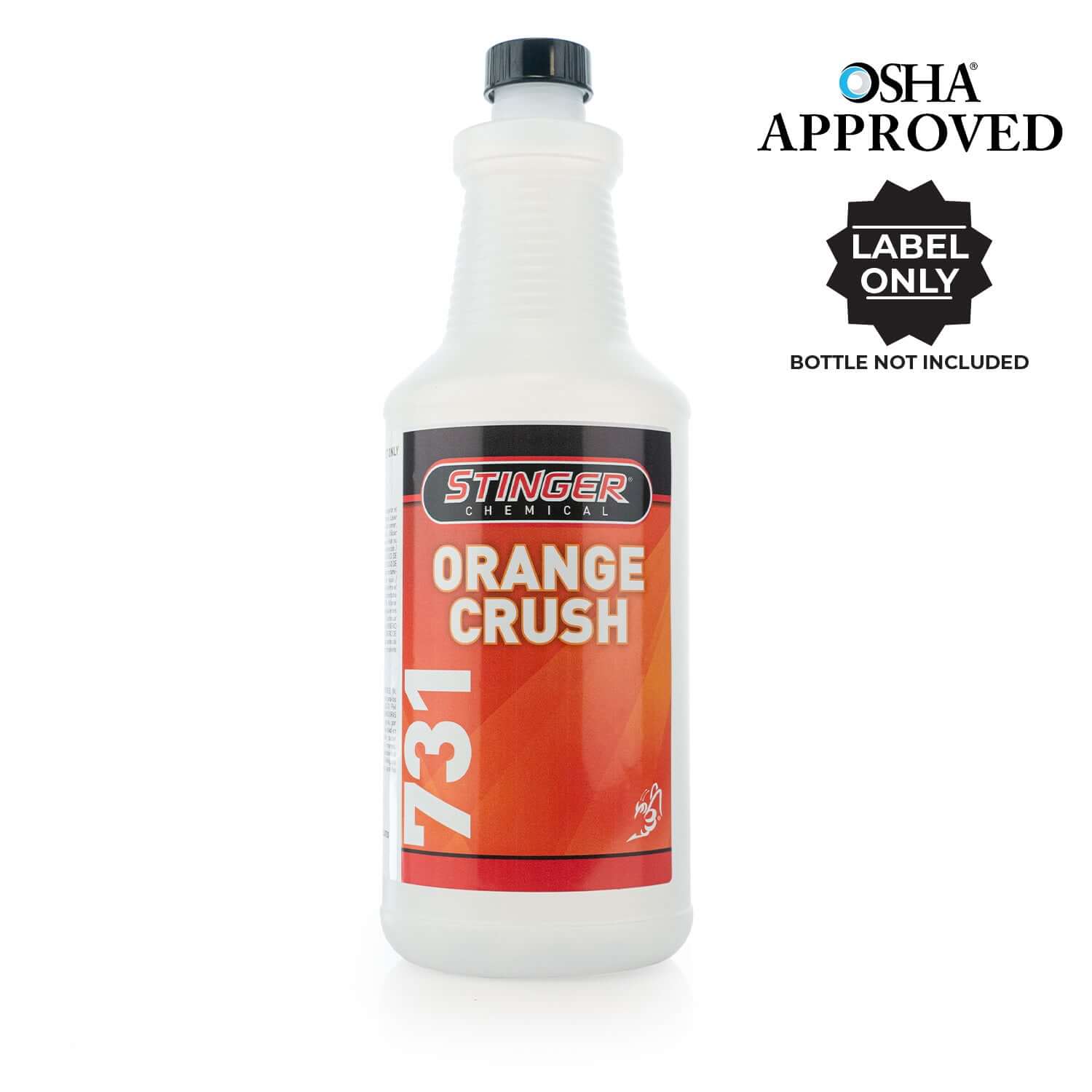
SDS LABEL: If you purchase the SDS Bottle label you need to know that the labels are sold individually for aesthetic bottle labeling in your shop and are also approved by OSHA for professional shop use. They fit most standard 32 ounce bottles and can be ordered here right on the product page.
Information:
Chemical Base: Water
Scent: Citrus
pH Level: 12 - Alkaline
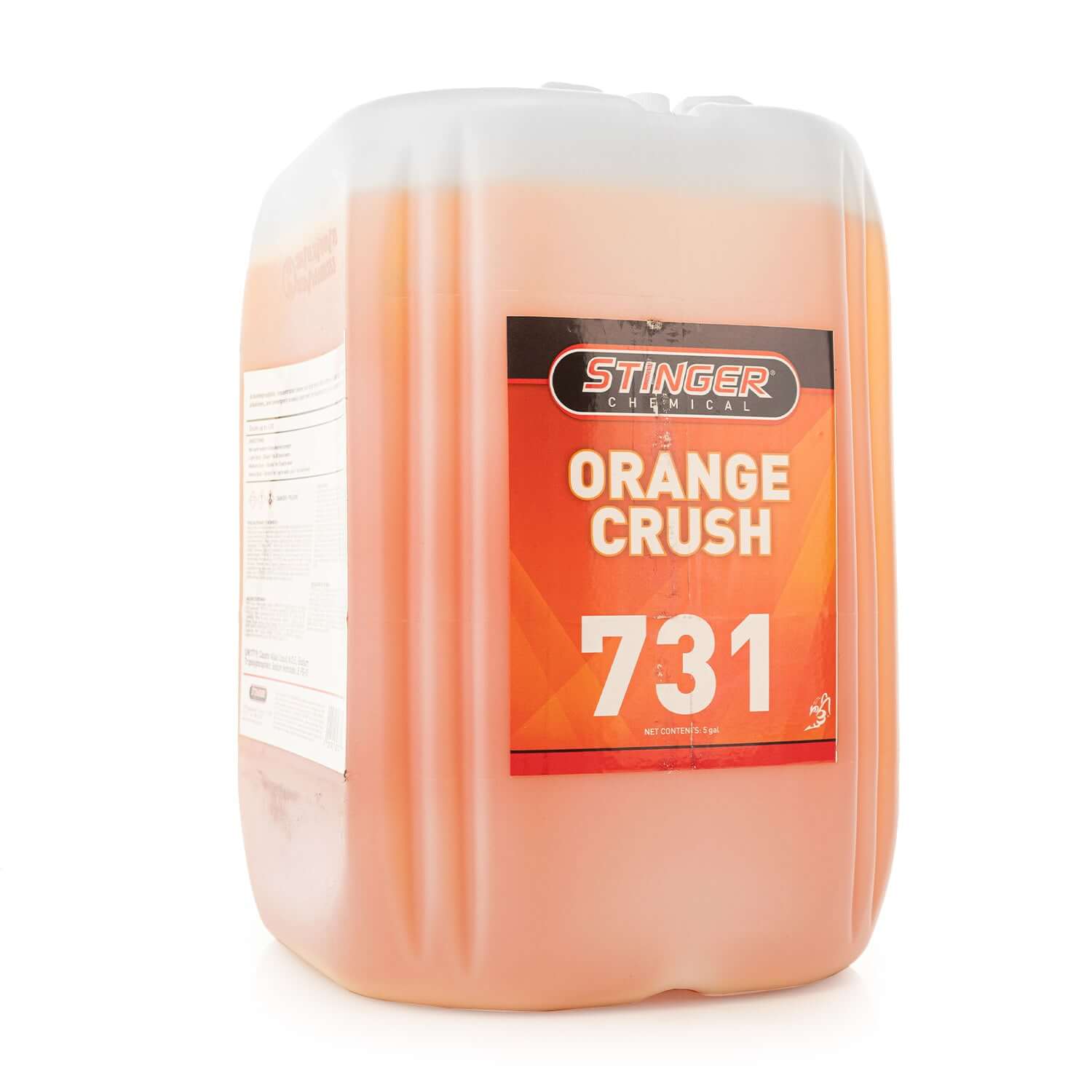
Available Size(s): Gallon & 5 Gallon.
Content(s): 1 Container or Label.
Dilution Recommendations:
Use Recommendations:
Safety Data Sheet
Stinger Chemical Orange Crush Degreaser
FOR EMERGENCIES CALL CHEMTREC:
1-800-424-9300
Businesses Save Money
FREE UPGRADE
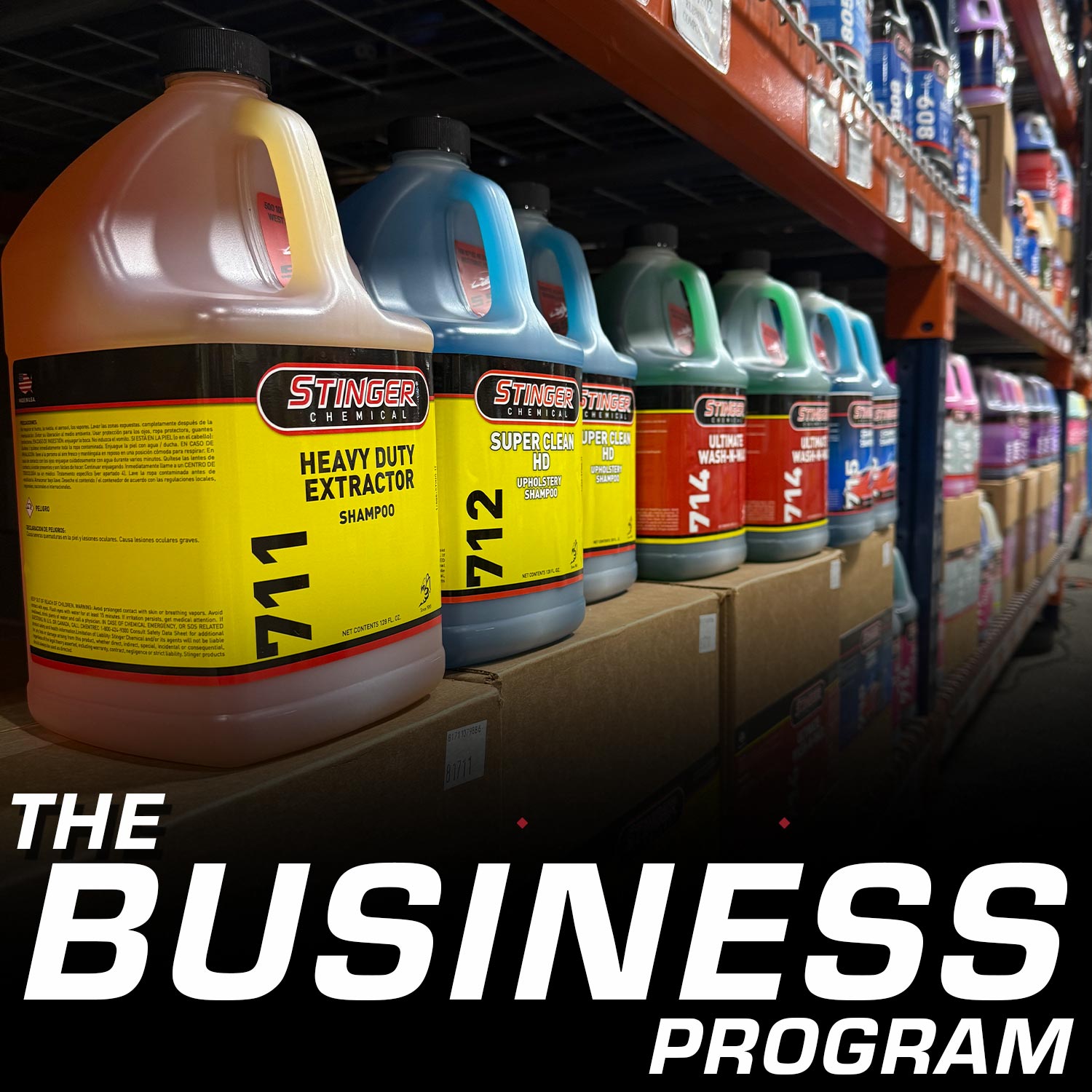
If you own a business or LLC you can sign-up for a free business account below! Get access to better pricing, exclusive products, bulk discounts, and more!
Trainings - Tutorials - & More!
SNS on Youtube
Check out our Youtube for product demos, detailing tips, training, and so much more. Throw us a subscribe if you find value in the content!