Rhopoint Americas
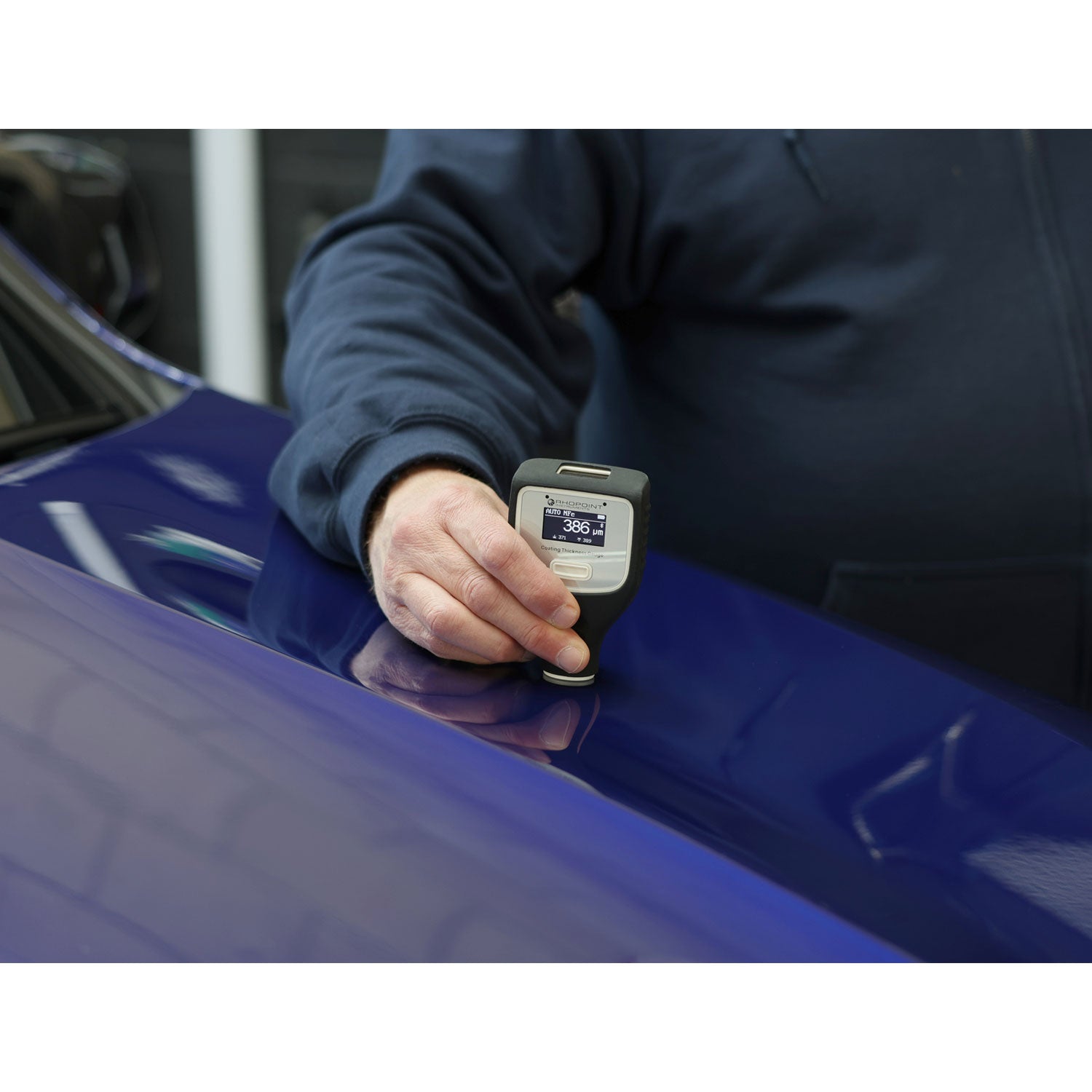
Rhopoint Coating Thickness Gauge
Rhopoint Coating Thickness Gauge
SNS Auto Supply
750 11th Ave NE
West Fargo ND 58078
United States
Made in USA
Choose options
Made in USA
Made in USA
Measuring Device for Clear Coat Thickness
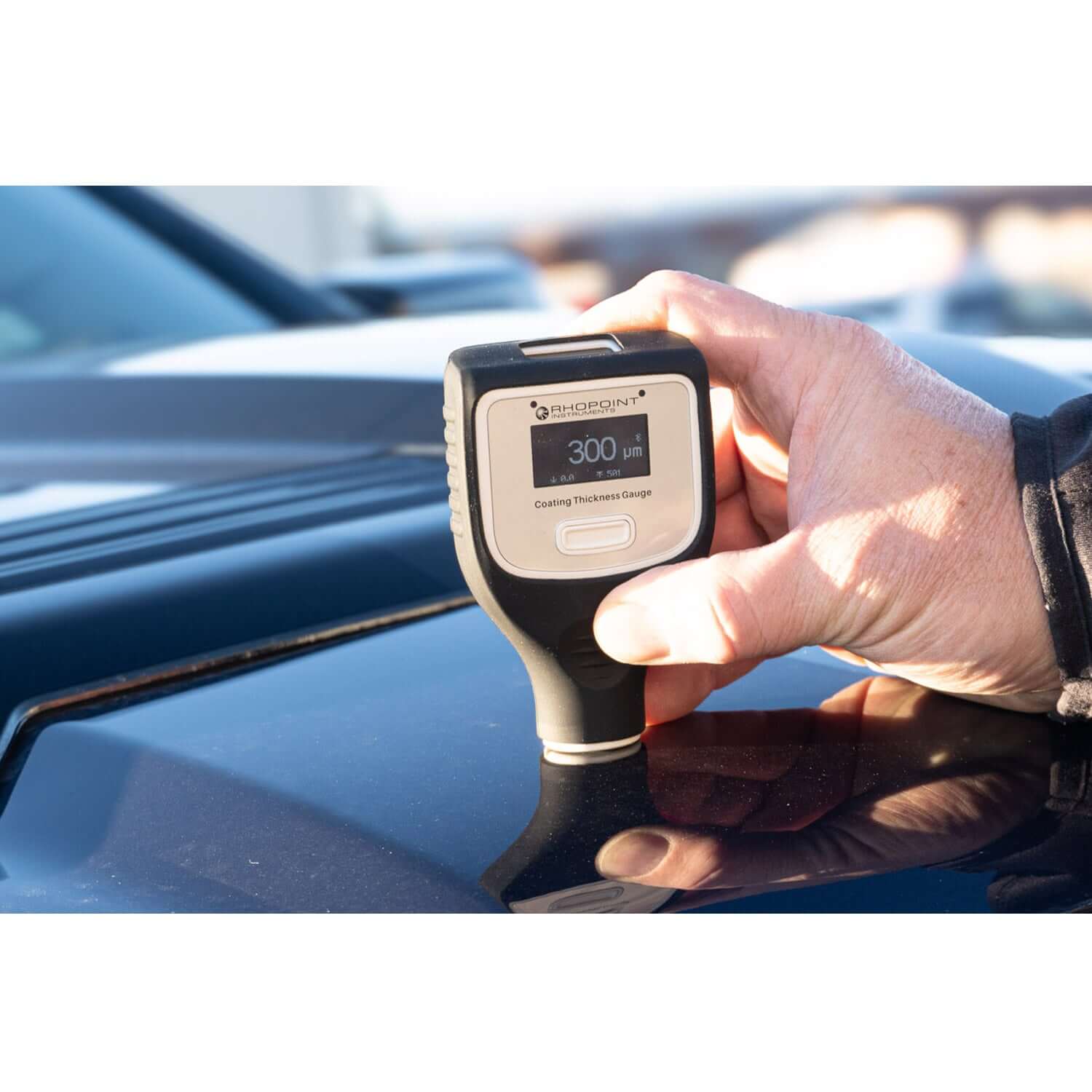
The Rhopoint Coating Thickness Gauge is your key to elevating the precision of your paint correction endeavors. As a professional or enthusiast, you understand the critical importance of achieving the perfect finish. This advanced tool goes beyond the basics, providing an unparalleled level of accuracy that sets the stage for exceptional results. QUICK REPORT APP AVAILABLE ON THE APP STORE & GOOGLE PLAY STORE, See below for a link to download.
Features:
🌟 Great Accuracy: Achieve the perfect finish with confidence. The Rhopoint Coating Thickness Gauge offers unparalleled accuracy, allowing you to measure coating thickness with precision and reliability, ensuring optimal results every time.
💪 Professional-Grade Performance: Designed for professionals who demand the best, this gauge delivers professional-grade performance that exceeds expectations. Whether you're performing paint correction in a professional setting or as an enthusiast, this tool ensures exceptional results.
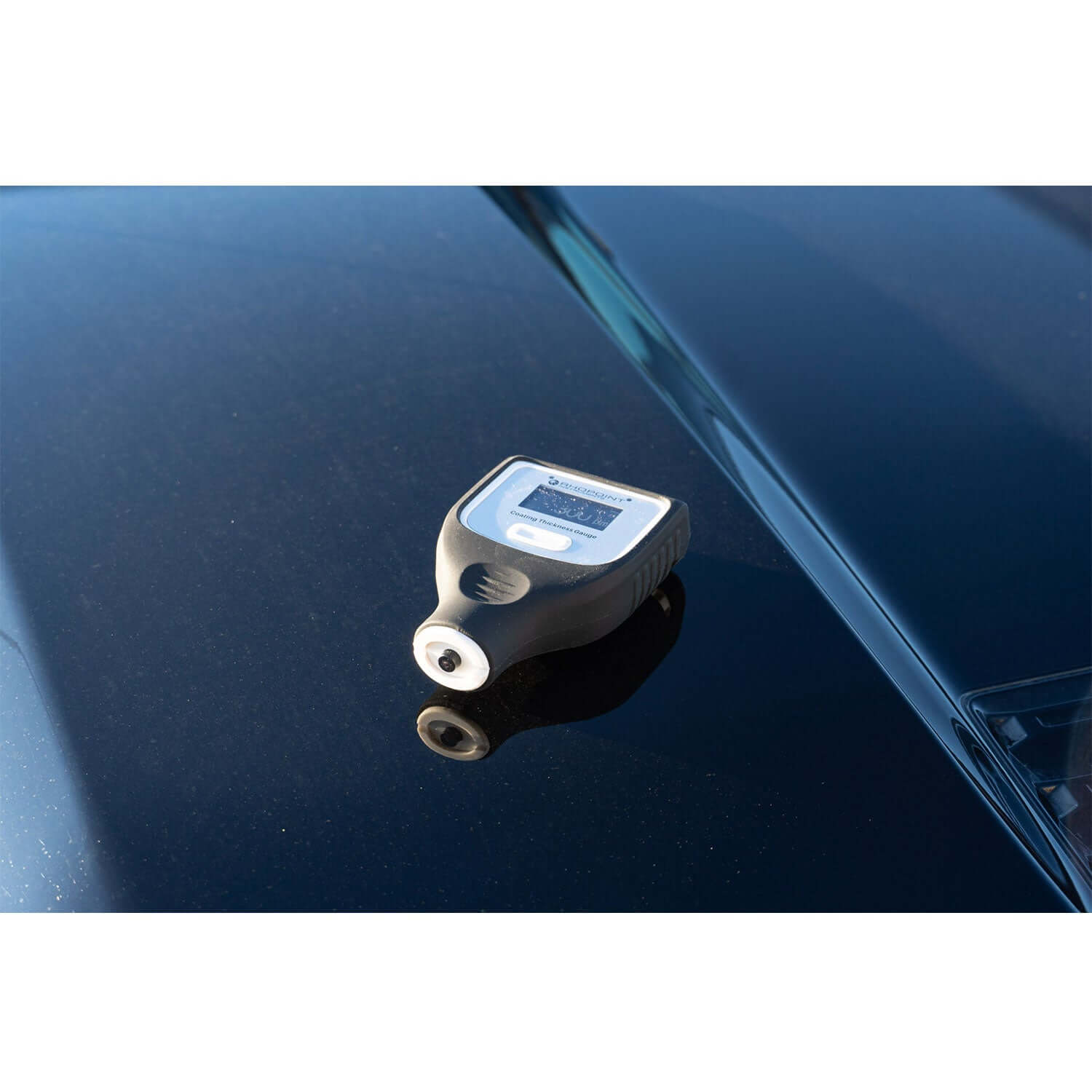
🔧 Easy to Use: With its user-friendly interface and intuitive design, the Rhopoint Coating Thickness Gauge is easy to use, making it suitable for professionals and beginners alike. Simply place the gauge on the surface to be measured and let it do the rest.
✨ Versatile Applications: Whether you're working on automotive paint surfaces, industrial coatings, or other applications, this gauge is versatile enough to handle a wide range of projects, making it a valuable addition to any toolkit.
Directions for USE:
Additional Information:
Functionality: Measuring Thickness of Paint & Clear Coat.
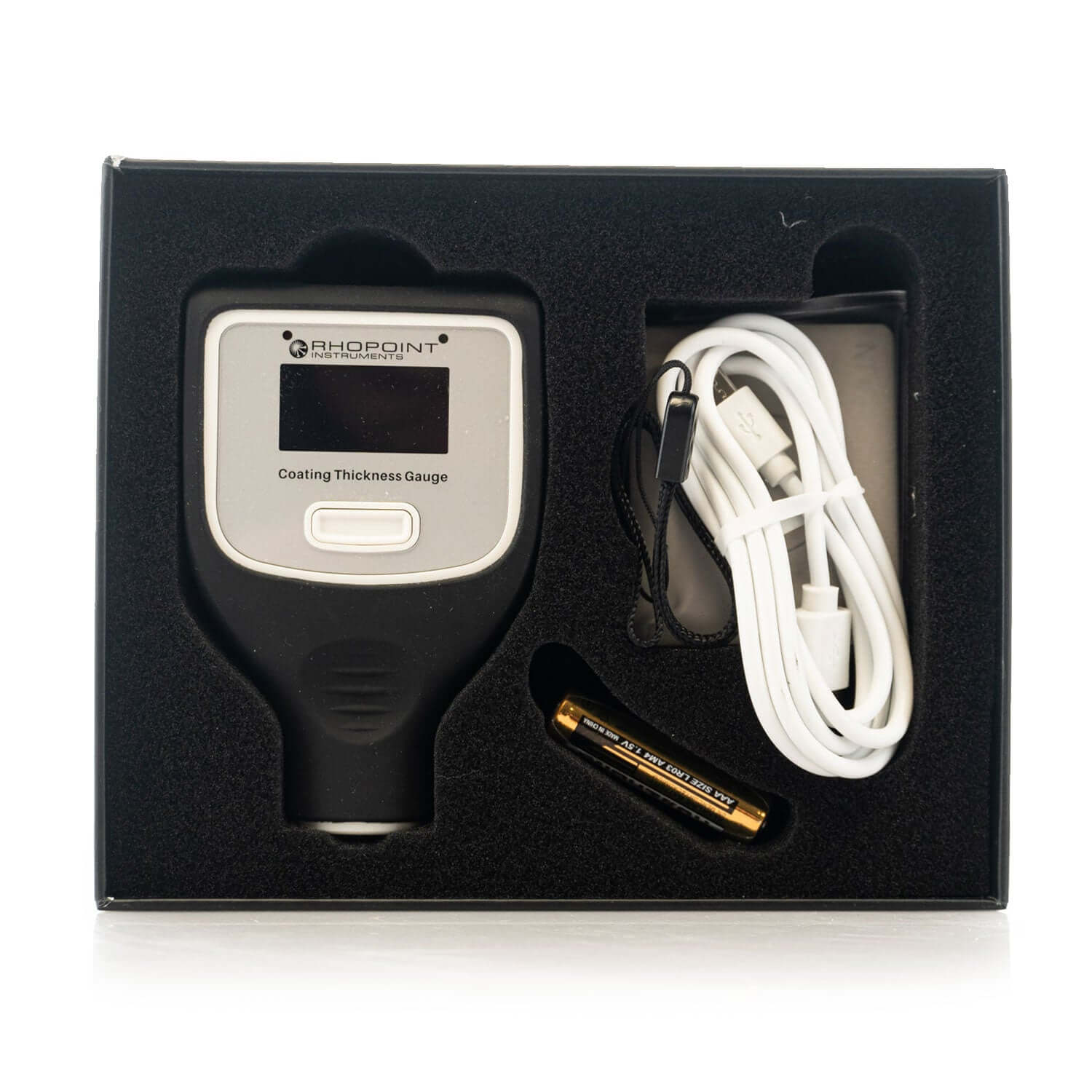
Power Source: (2) AAA Batteries (Included in Box)
Size: 1" x 2.5" x 4".
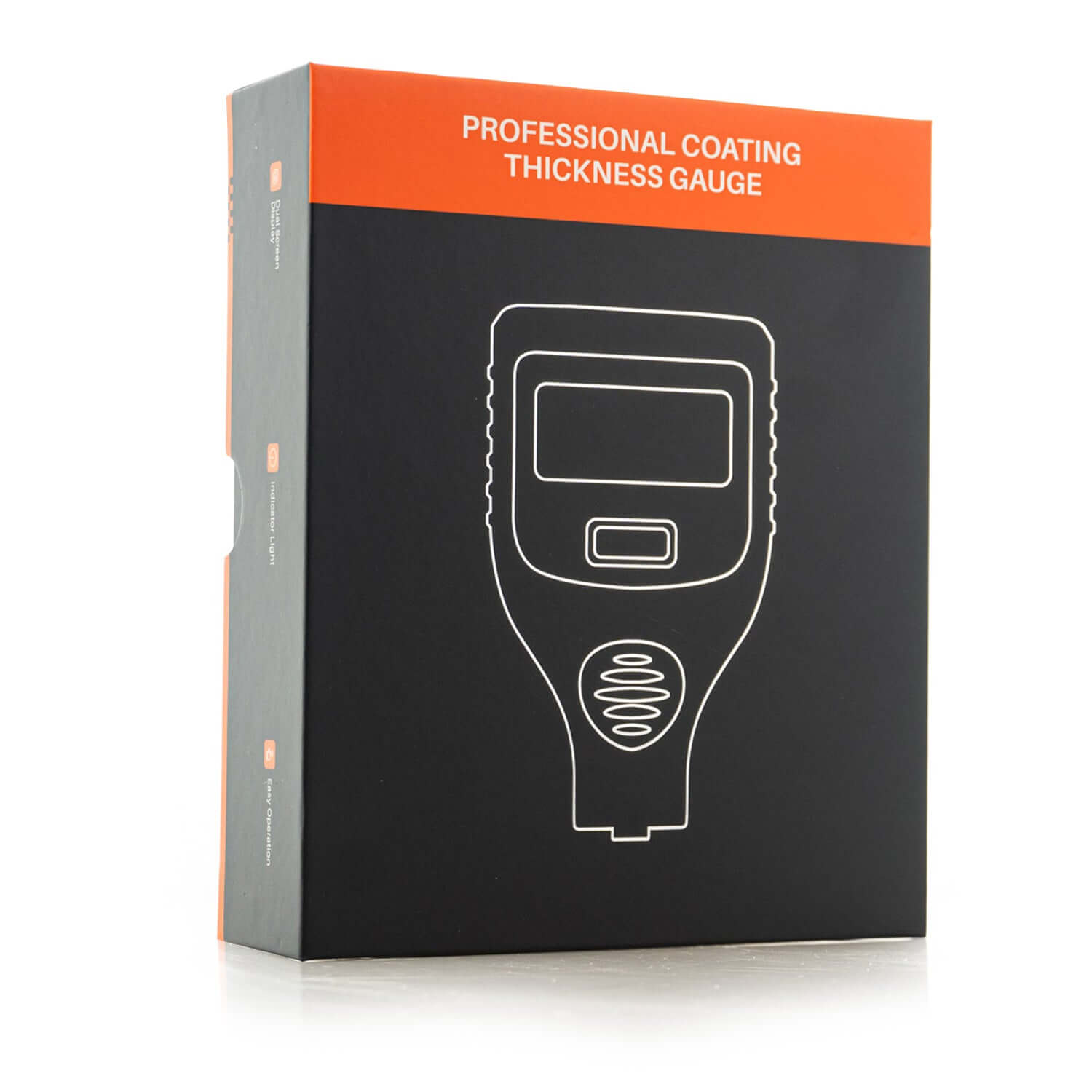
Content(s): 1 Coating Gauge Kit.
What to Use it for:
Manuals:
What is all of this?
Great question! Like you we were (and still are some days) very confused about what all the mils, microns, RIQ, etc. meant. So, we break it all down in the information below and we truly hope it will help your process evolve!
Coating Thickness Measuring
The measurement the tool uses takes place be signaling between the metal surface you are working on and the magnet that resides in the device, the resulting measurement it the thickness of the layers in-between.
Measurements are in micrometers "μm" (AKA Microns) which is an imperial (European) measurement form for 1/1,000,000 of a meter, the American equivalent would be mils measuring in at 1/1,000 of an inch.
1 μm = 25.4 mils
For example if you have 3 mils of thickness on a clear coat you would take 3x25.4 and get the American equivalent of 76.2.
**YOU CAN ALSO ADJUST YOUR RHOPOINT DEVICE TO READ IN EITHER ONE**
The industry standard for clear coat that is considered "too thin" for many beginners is roughly 3 mils or 80-100 microns.
We are suggesting to not do correction at these levels, but understand clear coat now-a-days are getting less and less thin so for your sake just please proceed with caution!
Detailometer FAQ
None of the Detailometer measurements directly measure clear coat thickness. The detailometer is a separate device from the coating thickness gauge and measures optical surface quality not thickness. What it measures;
- How light reflects from the top microns of the clear coat.
- The severity of micro-marring, haze, texture, and clarity loss.
- How well the clear coat surface has been leveled and refined.
Define GU:
Gloss 20° measures traditional gloss units (GU) for a vehicle. It measures these units using a reflection of light accross the surfaces finish. The light reflection is at an angle of 20° which is good for high-end finishes on automotive clear coat.
What is good and bad GU?
85–95 GU → Excellent
75–85 GU → Good
<75 GU → Dull or marred
How do I explain this value to my customer?
Gloss Units are a standard industry measurement for shine. The Higher gloss numbers indicate a deeper, more shiny finish.
Define Haze:
Haze measures how much light is being scattered by tiny scratches and imperfections in the clear coat instead of reflecting cleanly back like a mirror. When light scatters, the paint either looks cloudy or milky rather than sharp and crisp. A lower haze value means the clear coat surface is smoother and clearer, allowing light to reflect evenly because it is scattering less!
What causes haze?
- Micro-scratching
- Improper compounding
- Dual-Action haze
- Oxidation
- Poorly leveled clear coat
What is good and bad Haze?
<1.0 → Exceptional finish
1.0–2.5 → Very good corrected paint
2.5–5.0 → Visible haze
>5.0 → Poor finish / heavy marring
How do I explain this value to my customer?
Haze measures how much light is being scattered by tiny scratches in the clear coat. The lower the number, the clearer and more refined the paint surface is. Pretty much the same as our definition above.
What is logHaze?
logHaze is a logarithmic transformation of the haze value. Instead of measuring haze in a straight line (linear scale), logHaze spreads the lower end of the scale apart, making small but important differences much easier to detect and repeat.
logHaze Example:
Imagine two cars:
Paint Condition | Haze (Raw) | logHaze
After Compounding | 0.9 Haze | 2.1 logHaze
After Polishing | 0.4 Haze | 1.2 logHaze
To your eye: The finishing step made a huge visual improvement
In raw haze: The change looks small numerically (0.5)
In logHaze: The change is clearly and meaningfully represented.
Define DOI:
DOI stands for Distinctness of Image. Basically this measures the sharpness of reflected images. The sharper the lines, shapes, and edges the higher the DOI.
How to Read DOI Scale?
- 0–100
- Higher = better
What is good and bad DOI?
90–100 → Show-car / ceramic-ready
80–90 → High-quality correction
70–80 → Acceptable but not refined
<70 → Noticeable distortion
What Causes Low DOI?
- Orange peel
- Micro-marring
- Poor Clear-Coat leveling
- Texture left after Compounding
How do I explain this value to my customer?
DOI tells us how sharp reflections appear in the paint. Higher numbers mean the clear coat is smoother because it reflects images more clearly.
Define Rspec:
Rspec or Rspecific measures how efficiently the clear coat reflects light in a single, mirror-like direction. It evaluates how much light returns directly to the sensor at the exact reflection angle, rather than being scattered by surface texture or microscopic defects. Higher Rspec values indicate a smoother, more refined clear coat surfaces.
How to Read the Rspec Scale?
- Higher = Better
- 90–100 = Exceptional
- 80–89 = Very Good
- 70–79 = Good
- 60–69 = Fair
- <60 = Bad
What Rspec Indicates?
- Surface smoothness
- Resin leveling
- Polishing refinement
Relationship to Gloss: Similar to gloss but more angle-specific. Less influenced by color than traditional gloss units.
How do I explain this value to my customer?
Rspec tells us how much light the paint reflects straight back like a mirror. Higher numbers mean the surface is smoother and more refined. We use it to confirm the paint is truly polished, not just shiny.
Define RIQ:
RIQ (Reflected Image Quality) is often the best single metric for explaining results to customers because it mirrors human visual perception.
What Does RIQ Measure?
A composite index combining:
- DOI (Distinction of Image)
- Haze
- Surface texture effects
How to Read the RIQ Scale
- Higher = Better
- 95–100 = Exceptional
- 90–94 = Excellent
- 85–89 = Very Good
- 80-84 = Good
- 70-79 = Fair
- 60-69 = Bad
- <60 = Very Bad
Professional Rule of Thumb:
- Below 80 → Paint condition is visibly compromised
- 80–89 → Good to very good correction
- 90+ → Premium or show-level finish
How do I explain this value to my customer?
RIQ is an overall clarity score that combines reflection, sharpness, and haze into one number. It closely matches what the human eye sees.
The Ideal Finishing Numbers
DOI = High (92-98)
logHaze = Low (0.6-1.0)
Rspec = High (90-98)
Gloss20 = High (90-95)
Technical Meaning: The clear coat is smooth, refined, and minimally marred, producing sharp reflections and deep gloss.
High Gloss + High Haze
Gloss20 = High (88-94)
logHaze = High (1.8-2.6)
Rspec = Moderate to High (78-88)
Technical Meaning: Surface reflects light strongly but also scatters it. Micro-marring is present even though shine looks strong. This typical after aggressive compounding stage.
Low Gloss + Low Haze
Rspec = High (85-92)
logHaze = High (1.0-1.8)
DOI = Low (72-80)
Technical Meaning: There is minimal micro-scratching, but the clear coat lacks resin smoothness (worn clear coat) or has oxidation, limiting reflectivity.
High Rspec + Low DOI
Rspec = Low (60-70)
logHaze = Low (0.8-1.3)
Gloss20 = Low (68-78)
Technical Meaning: The surface reflects light efficiently, but reflection sharpness is reduced by clear coat texture such as orange peel.
Moderate Haze + High DOI
Rspec = Moderate (75-85)
logHaze = Moderate (1.4-2.0)
DOI = High (88-94)
Technical Meaning: Reflections are sharp overall, but some micro-marring remains, common after single-step corrections. Indicates a 2-3 step correction is needed.
High Rspec + High Gloss + High Haze
Rspec = High (88-95)
logHaze = High (2.0-3.0)
Gloss20 = High (90-96)
Technical Meaning: The surface reflects strongly but also scatters light heavily, often due to fillers or oils masking defects.
High Gloss + Low Rspec
Rspec = Low (65-75)
DOI = High (78-85)
Gloss20 = High (88-92)
Technical Meaning: The paint appears shiny overall, but mirror-like reflection strength is limited, often due to soft clear coat or oils. They call this the Wide-Angle Shine.


For APPLE USERS
Quick Report App
Click the button below to access the app via your phone in order to gain access to the quick report system.
(App is free when you purchase a rhopoint device)
For Android Users
Quick Report App
Click the button below to access the app via your phone in order to gain access to the quick report system.
(App is free when you purchase a rhopoint device)
Check into some of these
Great Pairs!